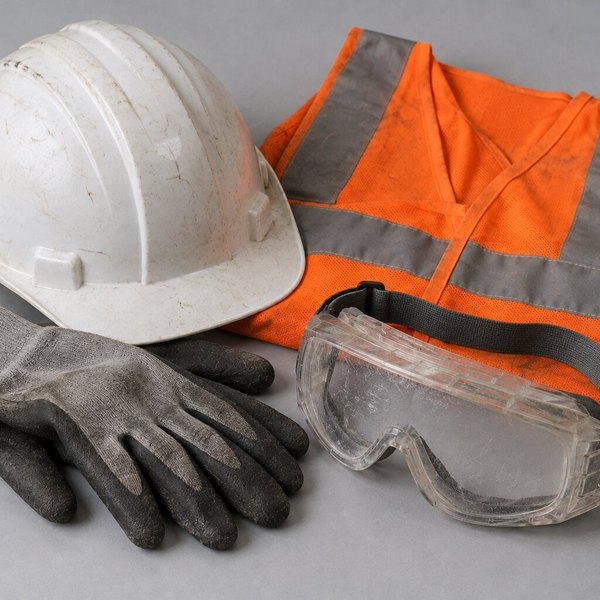
Ask five site managers what the minimum PPE on a UAE construction site is and you will get five slightly different answers, because the real answer comes from the project's HSE plan and the hazards on that site. What follows is a practical checklist by hazard, using the standards that PPE is normally supplied to. It is a buying guide, not a legal document: your HSE plan, your consultant and the relevant local authority set the actual requirement.
PPE is the last line of defence
Personal protective equipment sits at the bottom of the hierarchy of controls. It matters most when the hazard cannot be removed or engineered out, and it only works if it is the right type, the right size and worn properly. That is why the specification should start with the hazard, not the catalogue.
The core kit, by hazard
| Hazard | Equipment | Standard to ask for |
|---|---|---|
| Falling objects, bumps | Safety helmet with chin strap where needed | EN 397 |
| Crushing, nails, wet ground | Safety footwear, S3 for most outdoor site work | EN ISO 20345 |
| Vehicles and plant | High-visibility vest, jacket or coverall | EN ISO 20471 |
| Cuts, abrasion, handling | Gloves matched to the task | EN 388 |
| Dust, debris, splash | Safety glasses or goggles | EN 166 |
| Noise | Earplugs or earmuffs | EN 352 |
| Dust and fumes | FFP2 or FFP3 disposable respirator, or a reusable mask with filters | EN 149 for FFP masks |
| Work at height | Full-body harness, lanyard and anchor | EN 361 for harnesses, with the matching lanyard and connector standards |
Where buyers get caught out
Treating CE marking as proof. A CE mark on its own tells you very little, and counterfeit PPE is a real problem. Ask for the EN standard the item is certified to and the test certificate. For higher-risk items such as respirators and harnesses, the CE mark should be followed by the four-digit number of the notified body that checks production, so look for it and ask for the supporting documents.
Buying the wrong safety boot grade. S3 suits most outdoor construction with nails, wet ground and uneven surfaces. It is not automatically the right grade for every task, and our guide to safety shoe markings explains the codes.
Ignoring heat. In UAE summer, PPE that people find unbearable gets worn badly or not at all. Breathable hi-vis, lightweight helmets with ventilation, and a sensible approach to the summer midday work restrictions that apply in the UAE make compliance realistic. Specify for the wearer, not just for the certificate.
Forgetting sizes and fit. A harness or respirator that does not fit does not protect. For large crews, plan the size split up front and order a spread rather than a single size.
No inspection routine. Helmets, harnesses and lanyards have service lives and need inspection. Damaged or expired items should be taken out of use, and this matters most for fall protection.
Building a kit for a new site or camp
For mobilisation, the simplest approach is a per-worker issue: helmet, safety boots, hi-vis, gloves and eye protection, with hearing protection, respirators and harnesses added by trade. Colour-code helmets and vests by trade or role if the site requires it, and keep a small stock of spare sizes for new starters. If your project sits in the capital, see our page on PPE supply in Abu Dhabi.
What to send us for a quote
- Your PPE matrix or HSE plan, or a list of items with the standard required
- Quantities and the size split for footwear, clothing and harnesses
- Any colour coding, company branding or printing needed
- The delivery location and the date you need the kit on site
We supply the full range from our construction safety equipment division and will tell you if an item does not suit the hazard before you order. The standards behind each item are explained in our PPE standards guide, and the complete catalogue is on our safety equipment page.