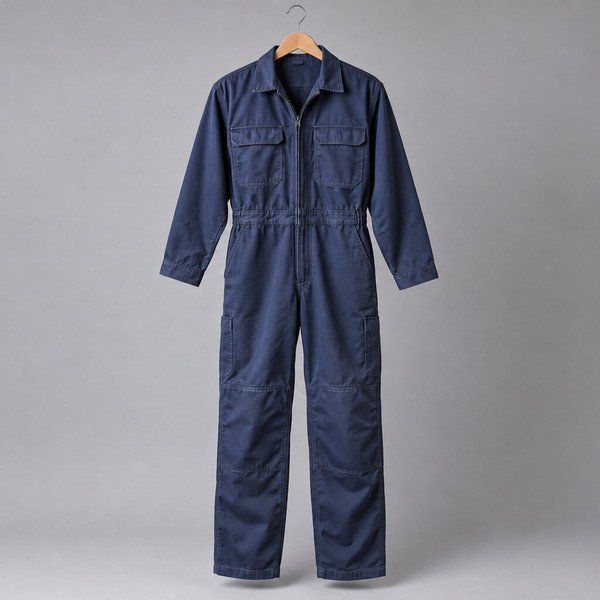
A coverall that is too hot stops being protective equipment, because people stop wearing it correctly. Sleeves get rolled, zips come down, and the garment that was specified for protection ends up half worn. In UAE summer conditions this is not a comfort complaint — it is a compliance problem with a fabric cause.
GSM: what the number actually tells you
GSM means grams per square metre, and it describes fabric weight. Workwear typically runs between 155 and 260 GSM, and buyers often treat a higher number as higher quality. It is closer to a trade-off than a ranking.
| Weight | Character | Suits |
|---|---|---|
| 155–175 GSM | Light, breathable, shorter service life | Summer outdoor work, hot indoor environments, high-turnover roles |
| 190–210 GSM | The practical middle ground | General site and industrial use year-round |
| 240–260 GSM | Heavy, durable, hot to wear | Abrasive work, welding, winter months, heavy industry |
Heavier fabric lasts longer and resists abrasion better. It also traps heat. In July in Sharjah, a 260 GSM cotton drill coverall is a genuinely punishing garment, and the extra durability is poor value if it leads to people wearing it improperly.
Cotton, poly-cotton, or polyester
100% cotton
Breathable, comfortable against the skin, and it does not melt — which is why cotton remains standard around hot work and welding. It creases, shrinks if not pre-treated, takes longer to dry and wears out faster at stress points. Premium cotton coveralls around 210 GSM are a common choice for site supervision and general construction.
65/35 poly-cotton
The most widely used industrial workwear blend, and for most UAE applications the sensible default. Polyester adds tensile strength, shape retention and fast drying; cotton keeps the comfort and breathability next to the skin. It holds colour through repeated industrial laundering better than pure cotton, which matters when garments carry your branding.
The caution: polyester melts. Any blend containing it is unsuitable near hot work, sparks or flame unless it is a certified flame-resistant construction.
80/20 poly-cotton and higher polyester
More durable and faster drying still, but noticeably less breathable. It suits controlled indoor environments — warehousing, logistics, light assembly — more than outdoor summer work.
Flame-resistant fabric in the heat
FR workwear introduces a second trade-off. Inherently flame-resistant fabrics carry protection in the fibre itself and retain it for the garment's service life. Chemically treated fabrics are cheaper initially but can lose FR performance through repeated industrial laundering, particularly at the wrong temperature or with the wrong detergent.
In Gulf conditions, breathability of FR fabric matters more than it does in cooler climates. Modern FR constructions vary considerably in how they handle heat and moisture, and the difference between a comfortable and an unbearable FR coverall at 45°C is large. If you are specifying FR, ask about fabric weight and construction, not only the certification, and get sample garments before a bulk order.
Colour, hi-vis and heat
Darker colours absorb more radiant heat. Navy and black hide dirt and look smarter, which is why they dominate, but on outdoor summer work a lighter shade is measurably cooler.
Hi-vis brings its own consideration. Fluorescent fabric with retro-reflective tape traps heat, and the tape itself does not breathe at all. Where high visibility is required in summer, look for garments with ventilation panels or a lighter base fabric to compensate, rather than treating hi-vis as a straight substitution for a standard coverall.
Finishing terms worth understanding
- Sanforized — pre-shrunk during manufacture. Without it, expect meaningful shrinkage on first industrial wash, which is how a correctly sized order becomes a tight one.
- Mercerized — a cotton treatment that improves strength, dye uptake and lustre.
- Pre-shrunk — used loosely; ask specifically whether the fabric is sanforized.
Sizing for Gulf conditions
Order a size up from what a fitted garment would suggest. Airflow between the fabric and the skin is a large part of what makes a coverall tolerable in heat, and a snug fit removes it. A slightly loose coverall is cooler, and it also allows a base layer underneath where the work requires one.
Size ranges typically run S to 5XL. For a mixed workforce, order a spread rather than a concentration in the middle sizes — running out of the extremes is the usual cause of people wearing whatever fits badly.
A practical specification
For most UAE outdoor summer work: 65/35 poly-cotton at 175–190 GSM, sanforized, in a lighter colour, ordered a size up. For hot work and welding, move to 100% cotton or certified FR and accept the weight. For indoor logistics, a higher polyester content at a lighter weight works well and launders better.
Whatever the specification, request sample garments before a bulk order. Fabric weight and cut vary between manufacturers, and a sample worn for a full shift in summer tells you more than any datasheet will.
Requirements diverge by sector: see what we supply for construction and for oil and gas, where flame-resistant certification takes precedence over comfort in fabric choice.